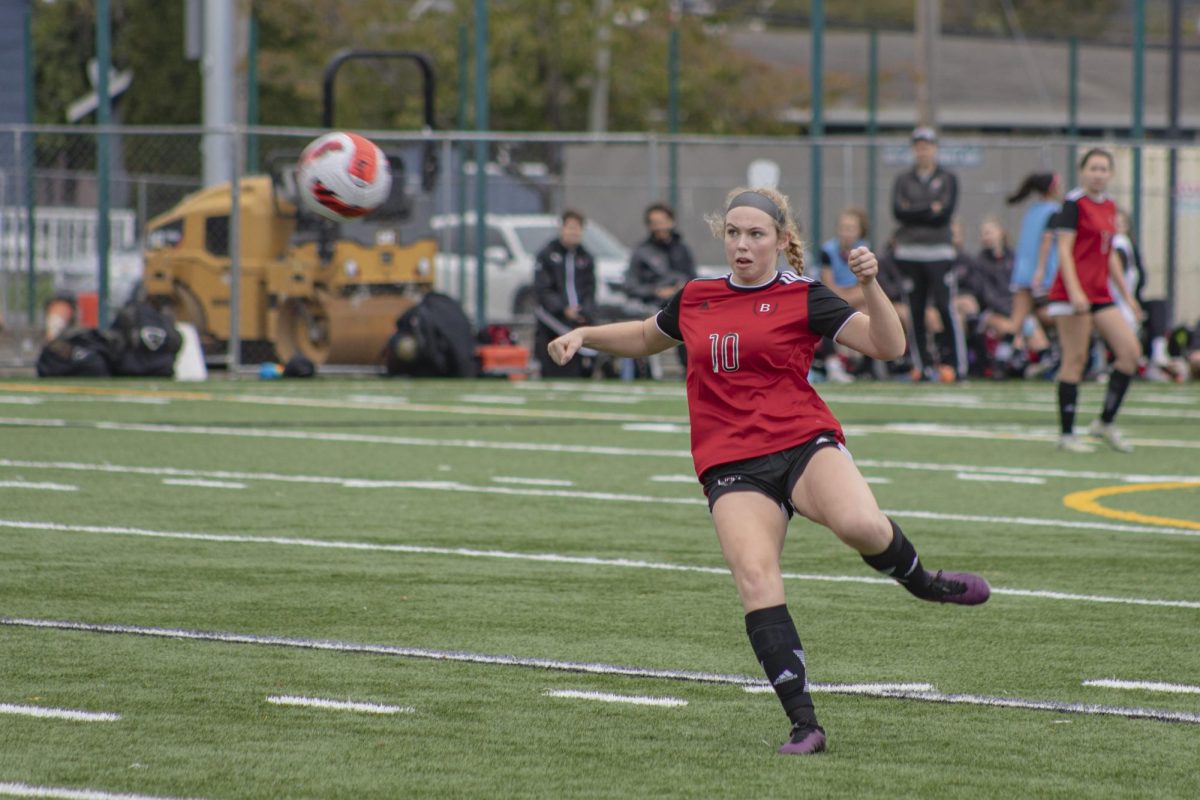
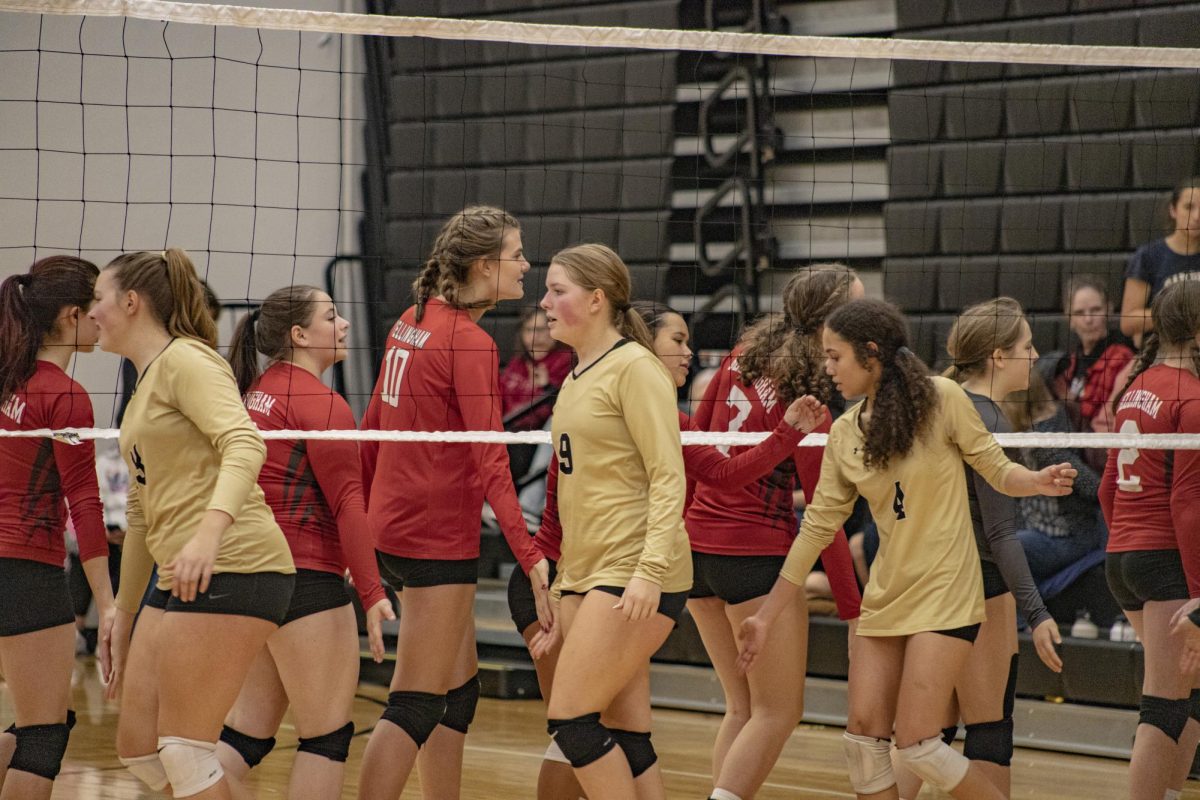
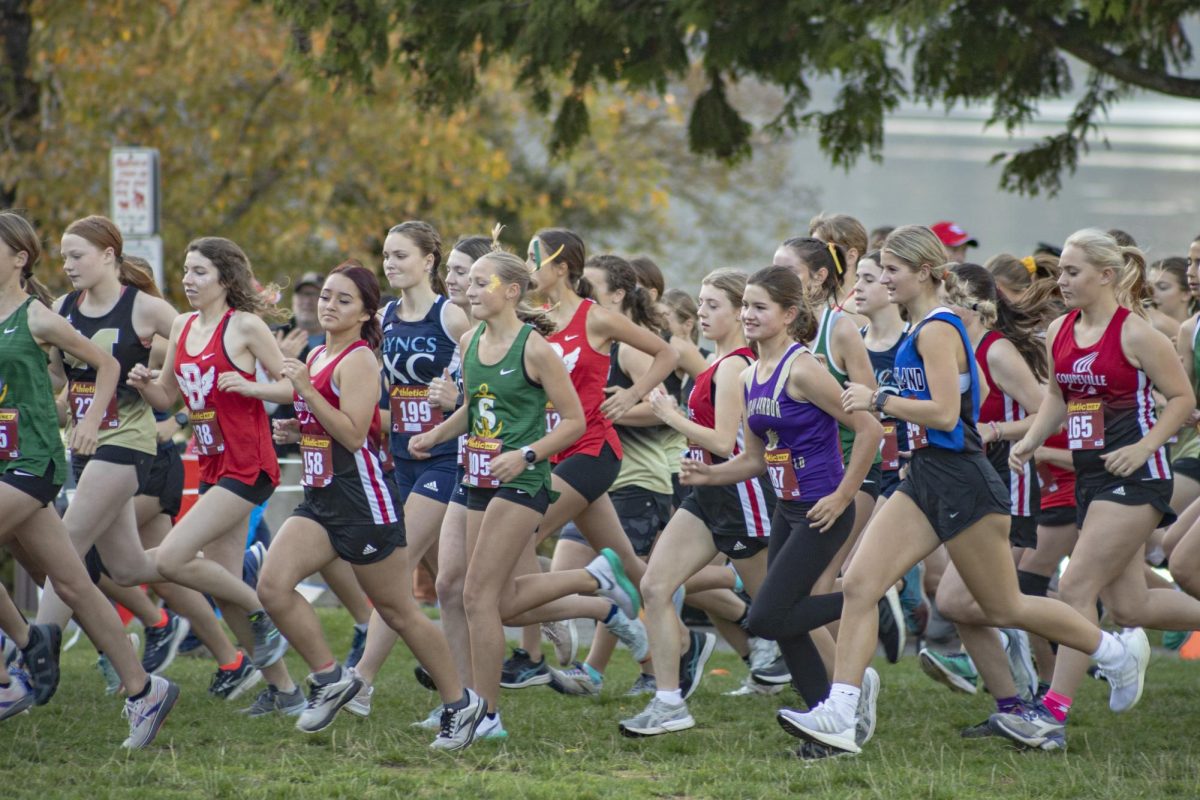
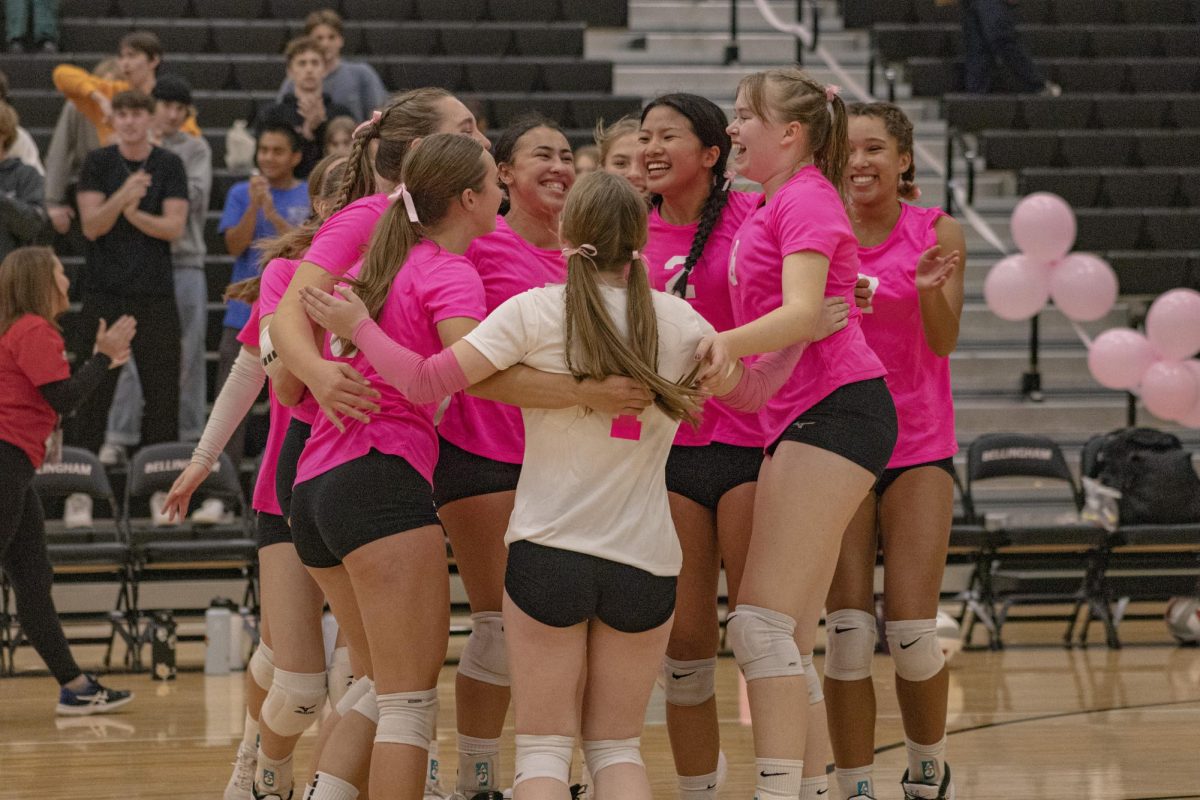
She wakes with the sun, venturing into the new light that creeps across the earth. It is not, however, the sun that wakes her, but the small, pulsing light inside, the drive that makes her hurdle obstacles and train her body until she believes she can no longer take it. But she can. For that light, burning inside, catches and blooms when she steps onto the pitch, the court, the rink, the track. It spreads and creates a feeling like no other when a foot connects with a ball, when a puck skids across ice, with the constant rhythm of ball and court. And when she has reached the goal, is under the basket, has raised her hand-
Almost no one will see.
The representation of women in sports is deeply flawed and, although it is improving, leaves much to be desired. According to Goalfive.com, female athletes make up an estimated 40% of athletes globally, yet the entire industry is allotted only around 4% of media coverage. This imbalance is deeply rooted in the culture built around sports- or, really, the lack of culture and representation allotted to women’s sports.
First of all, the gap in payment for male and female athletes is significant. Goalfive goes on to reveal that female athletes typically make 80 to 83% of an average men’s salary. In the highest cases, women can make ninety-four cents for every dollar a man makes. An ideal example lies in the difference of payment between the NBA and the WNBA. Since the establishment of the WNBA in 1997, the highest earning female player has made less than the lowest paid in the NBA (Adelphi University, 2023), but the true gap is eye-opening; the average salary of a player in the NBA is $7.5 million annually, while a woman’s maximum is around $116,000. Put that into your calculator. Furthermore, it has been shown that NBA players receive 50% of the profit made from revenue, the merchandise and ticket sales from the league, while women are allotted only 20%. The trend of inequality is further exacerbated across the entire sports industry. In comparison, the MLS and NWSL, the United States’ professional soccer leagues, has an average pay gap of almost nine times, with an average of $54,000 for women and $471, 279 for men; the PGA and LPGA, professional golf leagues, have a three times over gap; and professional volleyball tells a similar story of $250,000 to $100,000 (Bird, 2025).
A large part of this inequality is due to the underdeveloped nature of the women’s sports industry, with many leagues beginning only in the last thirty years. In fact, starting in the 1920s, before which women’s soccer was gaining popularity in Europe, many European countries issued bans on women’s soccer, claiming that it made women more masculine and unable to have children (Haas 2025). Similar banning of other sports rippled across the world. Since Title IX passed in the U.S. in 1972, coinciding with the lifting of many sports bans, more opportunities have arisen for girls and women. However, hints of the delayed development and social stigma still linger today. According to the Women’s Sports Foundation, American girls have around 1.3 million fewer opportunities to play high school sports than their male counterparts. Additionally, across the country only an average of 24% of collegiate athletic budgets are devoted to women’s sports, with an even smaller recruiting budget of 16%. Think of it like a skyscraper. If the base does not have a stable structure, building to into the sky is virtually impossible, or, if pulled off, extremely vulnerable to collapse. The same is true when applied to youth sports. If young women are not encouraged to participate and build confidence to lead, there will be no future for them in the field of athletics. The only way for the base, youth sports, to gain enough strength, however, is to see the promise of the upper stories, stretching far into the sky.
These upper stories are the social representation of women in sports, which, compared to men, is unbalanced. Despite the now wide variety of women’s sports leagues, only 18% of qualified coaches and 9% of senior coaches are women. Further still, of the publicly funded national governing boards that officiate these leagues, 49% are made up by less than 25% women. Even in their own sport, women are constantly officiated by men. When female athletes are given media attention, they are often overly sexualized and held to insanely specific beauty standards considering that they have worked their whole lives to be athletes. When interviewed, the focus is largely on family life, childhood, or domestic hobbies, practically anything other than the exact thing they have devoted their lives to. It seems almost as if a patriarchal society is pulling the classic ‘women belong in the kitchen’ line.
Oh, wait…
They are.
And this seeps down to the girls eagerly watching the screen, searching for someone who could be the manifestation of their own dreams. By 14, girls are 3 times more likely to drop out of sports as boys. This is due to social pressures like shaming around sexuality and body image, in addition to fear of being judged and lack of confidence. 43% of teenage girls who once played sports, who considered themselves ‘sporty’, have given them up altogether (Women in Sport 2022). And those who have stuck with it? Women in sports are 8.3 times more likely to develop anorexia and 14.5% more likely to be diagnosed with bulimia. This is at least partially due to the emphasis on physical appearance over physical performance, which reduces female athletes’ worth to what they look like and hinders their performance and ability to succeed in sport. In addition, sexual harassment runs wild in an industry mostly controlled by men. One study showed that 45% of professional female athletes were subject to sexual harassment or abuse at the hands of men. Imagine working your entire life to make a dream possible, to rise to the top of your field only to be, once again, reduced to your appearance and the value society assigns it. If you’re a woman, you likely don’t have to imagine.
But here is where we can change the cycle. Men’s sports are seen as the standard, the face of the athletic industry. Think about it. There are two basketball leagues in the United States, the NBA and the WNBA. These acronyms stand for the National Basketball Association and the Women’s National Basketball Association. The mere phrasing of these titles implies that the league played in by men is what represents the entire industry, implies that women’s sports is but an offshoot, merely an interpretation of the men’s game. In fact, the NBA actually owns the W, and purposefully places their (shorter) season in the summer, so as not to interfere with its own season.
Look through the lens of soccer at one of the biggest events in the field, the World Cup, occurring every four years since the first was held in Uruguay in 1930. This, of course, excluded women until 1970, when the first women’s tournament was held in Italy. Today, the events are separated in moniker by THE World Cup, played in by the men, and the Women’s World Cup, played in by, of course, women. Notably, these two tournaments are not held at the same time, but on completely different cycles, preventing any interaction or competition.
Women’s sports exist and thrive within themselves, but in order to buck the trend of male domination, the women of the world must ban together against it. The true reason male leagues have alternated seasons, have banned women from playing sports, is that they feel threatened. Women’s sports, in the pockets of history where it has thrived, have been wildly successful, drawing crowds and creating an energy that is palpable. So what does our society do when it feels threatened? It exerts control. We are half of the world’s population. If we can channel our power into equality, into an empire so large and successful its existence cannot by denied by anyone, then perhaps we will be too big to ignore. An industry that will demand respect and finally force the world to see that we, too, are strong. That we, too, deserve everything we’ve earned. That we will not be controlled.
And it makes a difference.
As stated by the Women’s Sports Foundation, teenage girls who participate in sports have a lower rate of accidental pregnancy and higher GPAs. Additionally, playing a sport can reduce the risk of diseases in middle age like breast cancer and osteoporosis. Especially important, it builds confidence and leadership skills exponentially, vital qualities in a patriarchal society. Plus, it has been shown to give girls a positive outlet through their teenage years and encourage new relationships and communication skills. This is what those in power fear most. A woman’s realization of her power and her ability to apply it. And we can make it happen.
Today, in the early twenty-first century, the world is building toward this outcome. There are numerous foundations, many established by former professional women’s athletes including Billie Jean King, the record-breaking tennis player and Mia Hamm, the star of the ’99ers that won the United States their second world cup soccer trophy, meant specifically to help young women in sports by creating programs and offering financial assistance. Rates of media coverage are increasing exponentially for leagues like the WNBA, working toward getting women their fair share of global audiences. Financially, as of 2023, all major tennis tournaments pledged to allot identical prize money to men and women and have. in turn, followed through. When the U.S. women’s national soccer team won the 2019 World Cup, they were awarded the highest amount of prize money yet- around $4 million. Slowly, we are building a dynasty that young girls can look to for encouragement and confidence, one that they are able to see themselves in. One that they can look at and think, If she could do it, I can do it.
She will wake at dawn.
It will not be the newfound light that wakes her, but the drive inside of her, glowing as she does what she loves most, a purpose no questioning gaze can rob her of. And as that light blooms into the dazzling flower of a dream that breathes air-
Its sparks will light a flame inside the wide-eyed girls, watching, as a hero is born.
“Everyone thinks women should be thrilled when we get crumbs. I want women to be able to have the cake, the icing, and the cherry on top too,” -Billie Jean King